From EBSA to EEBSA
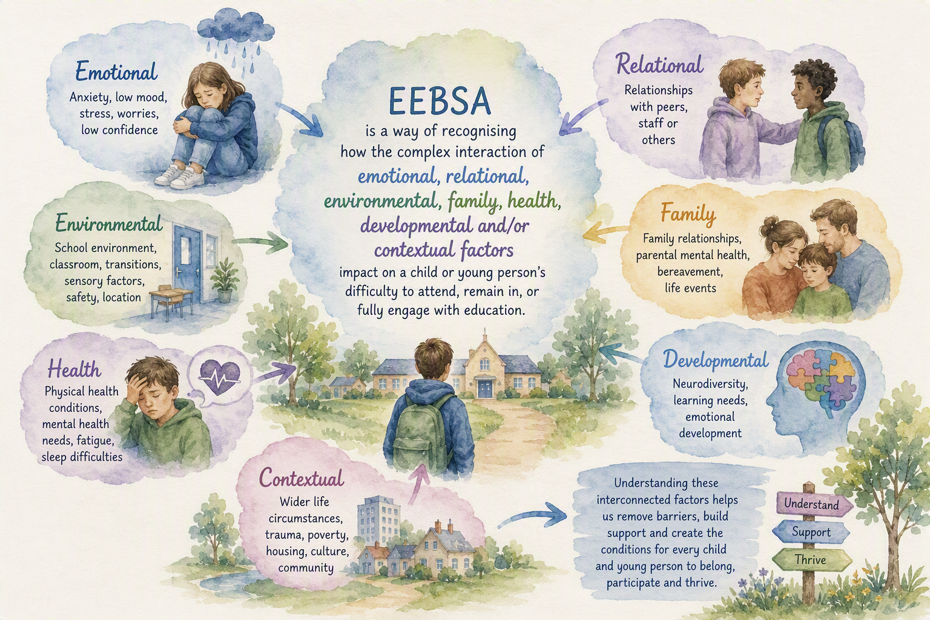
Across Cambridgeshire, we are moving from the term Emotionally Based School Avoidance (EBSA) to Environmental and Emotional Barriers to School Attendance (EEBSA). This change reflects the importance of looking beyond the individual child to consider the relationships, learning experiences, environments, health needs, family circumstances and wider systems around them.
This change in language is also a change in emphasis. EEBSA is a descriptive framework, not something that a child or young person “has”. As such, it should not be treated as a diagnosis or a fixed category. Instead, it's an invitation for us to listen carefully, remain curious and work together to understand what is making attendance or engagement difficult and what conditions could help the child or young person feel safer, more connected and better able to participate.
Introducing the EEBSA toolkit
The new Cambridgeshire EEBSA toolkit has been developed to support this approach in practice by bringing together guidance and practical resources to help schools and settings understand and respond to difficulties with attendance and engagement.
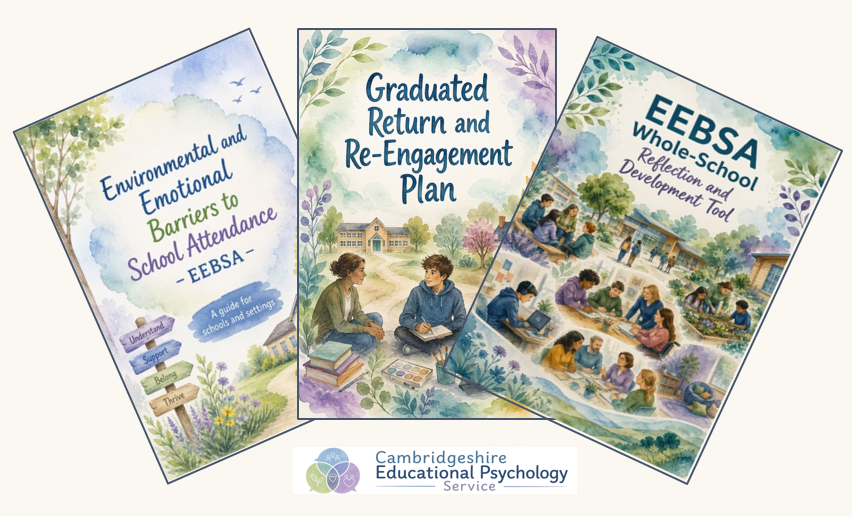
- Supporting EEBSA - A Guide for Schools and Settings introduces the EEBSA framework, explains how difficulties may develop and outlines key principles for early, relational and graduated support.
- Graduated Return and Re-engagement Plan (and Appendices) supports personalised planning with an individual child or young person, their family and relevant professionals.
- Cambridgeshire EPS EEBSA Whole School Reflection and Developmental Tool helps settings consider how their wider culture, relationships, curriculum, environments and systems shape attendance, participation, wellbeing and belonging.
These resources are designed to be used flexibly to support thoughtful conversations and manageable action, not to create a fixed pathway or additional paperwork. Schools can select the sections and tools that are most useful for their current context, build on information already gathered, involve children and families meaningfully, and revisit plans as circumstances change.